
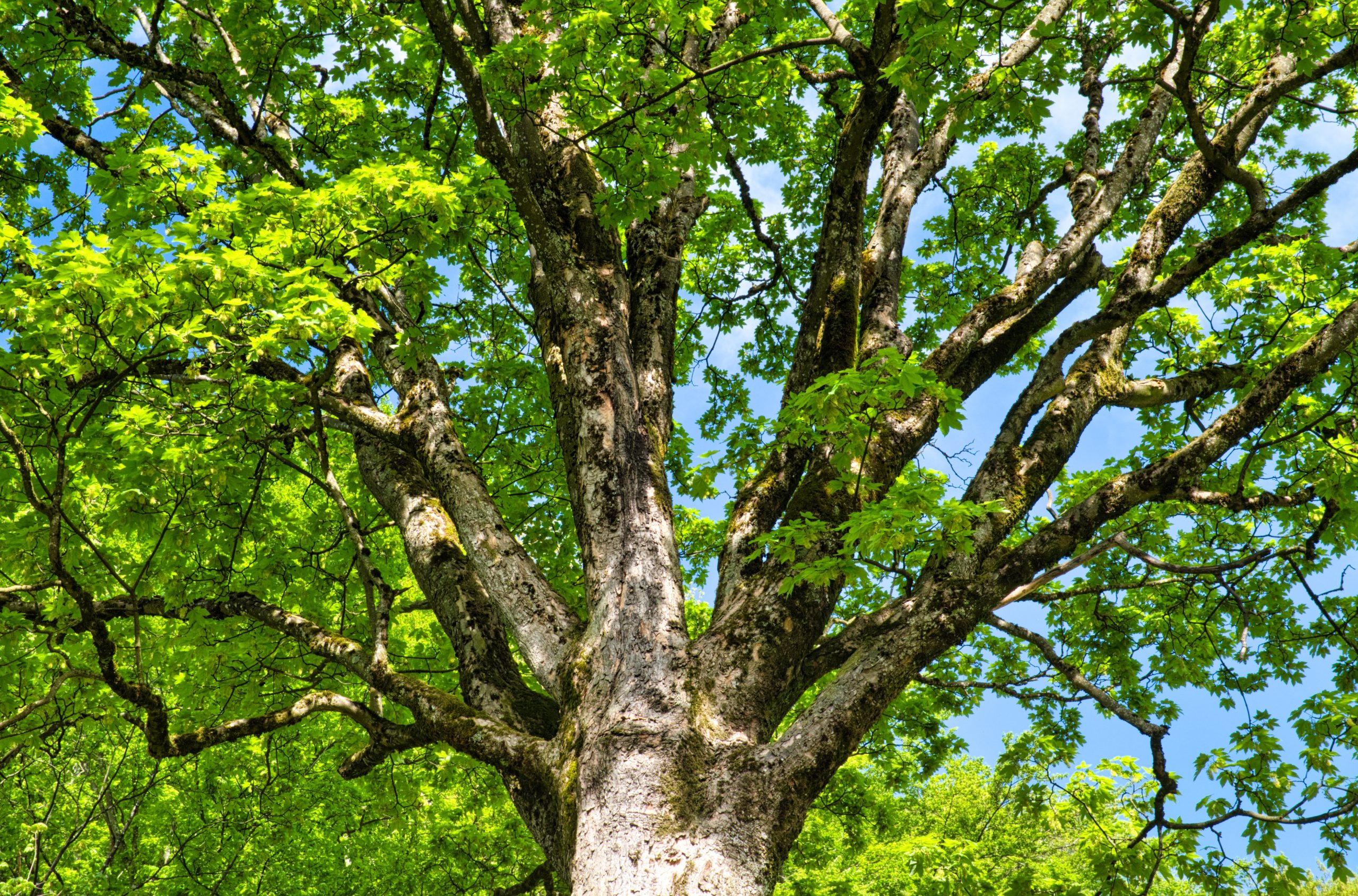
Trees are an important part of any garden, providing shade, privacy, shelter and plenty of natural beauty. However, as trees grow, their size and shape can sometimes become difficult to manage. This is where crown reduction can be useful. We’ve talked about The Benefits of Crown Reduction, now here’s how to identify when its appropriate.
Crown reduction involves carefully reducing the overall size and spread of a tree’s crown while maintaining its natural shape and structure. It should always be carried out by a suitably experienced professional, as removing too much growth can put unnecessary stress on the tree.
But how do you know when a tree actually needs crown reduction?
The Tree Has Outgrown Its Space
One of the most common reasons for crown reduction is simply that a tree has become too large for its surroundings.
A tree may have been an appropriate size when it was planted, but years of growth can leave branches extending towards buildings, neighbouring properties, paths or other structures.
Rather than removing the whole tree, a carefully planned crown reduction can sometimes bring its size back under control while allowing it to remain a healthy and attractive feature of the garden.
The Tree Is Blocking Too Much Light
Large trees can provide welcome shade during the summer, but excessive growth can also reduce the amount of natural light reaching your home or garden.
If branches have spread extensively across windows, patios or garden areas, crown reduction may help manage the tree’s overall spread.
It is important to remember that crown reduction is not simply about cutting branches back as far as possible. A professional tree surgeon will consider the tree’s species, age, health and natural shape before deciding how much growth should be removed.
Branches Are Growing Towards Buildings
Trees growing close to houses, garages, sheds and other structures may eventually develop branches that come into contact with roofs, gutters or walls.
Regular tree maintenance can help prevent these problems from becoming more serious. In some situations, crown reduction may be appropriate to create additional clearance and reduce excessive growth.
However, crown reduction isn’t always the right solution. Sometimes selective pruning or crown lifting may be more suitable.
The Tree Has Become Too Wide
A tree’s height isn’t always the issue. Sometimes the crown simply becomes too broad for the space available.
Branches may extend over driveways, gardens, footpaths or neighbouring properties. Reducing the overall spread can help keep the tree within a more manageable area.
For homeowners looking for a tree surgeon in Ilfracombe, getting professional advice is a good starting point if you’re unsure which type of pruning your tree requires.
Crown Reduction Can Be Better Than Tree Removal
In some cases, homeowners assume that an oversized tree needs to be removed completely. However, if the tree is healthy and structurally sound, crown reduction may provide a way to manage its size while retaining it.
Keeping a mature tree can have many benefits, including providing habitat for wildlife, improving the appearance of your garden and contributing to the local environment.
A professional assessment can help determine whether reduction, another form of pruning, or removal is the most appropriate option.
Professional Tree Surgery in North Devon
Every tree is different, so there isn’t one simple rule for when crown reduction is required. The decision depends on the tree’s species, condition, location and surrounding environment.
If you’re concerned that a tree has become too large, is blocking light or is growing too close to a building, it’s worth getting professional advice before reaching for the saw.
For homeowners across Ilfracombe and North Devon, an experienced tree surgeon can assess the tree and recommend a suitable approach to keep it healthy, safe and manageable.

