
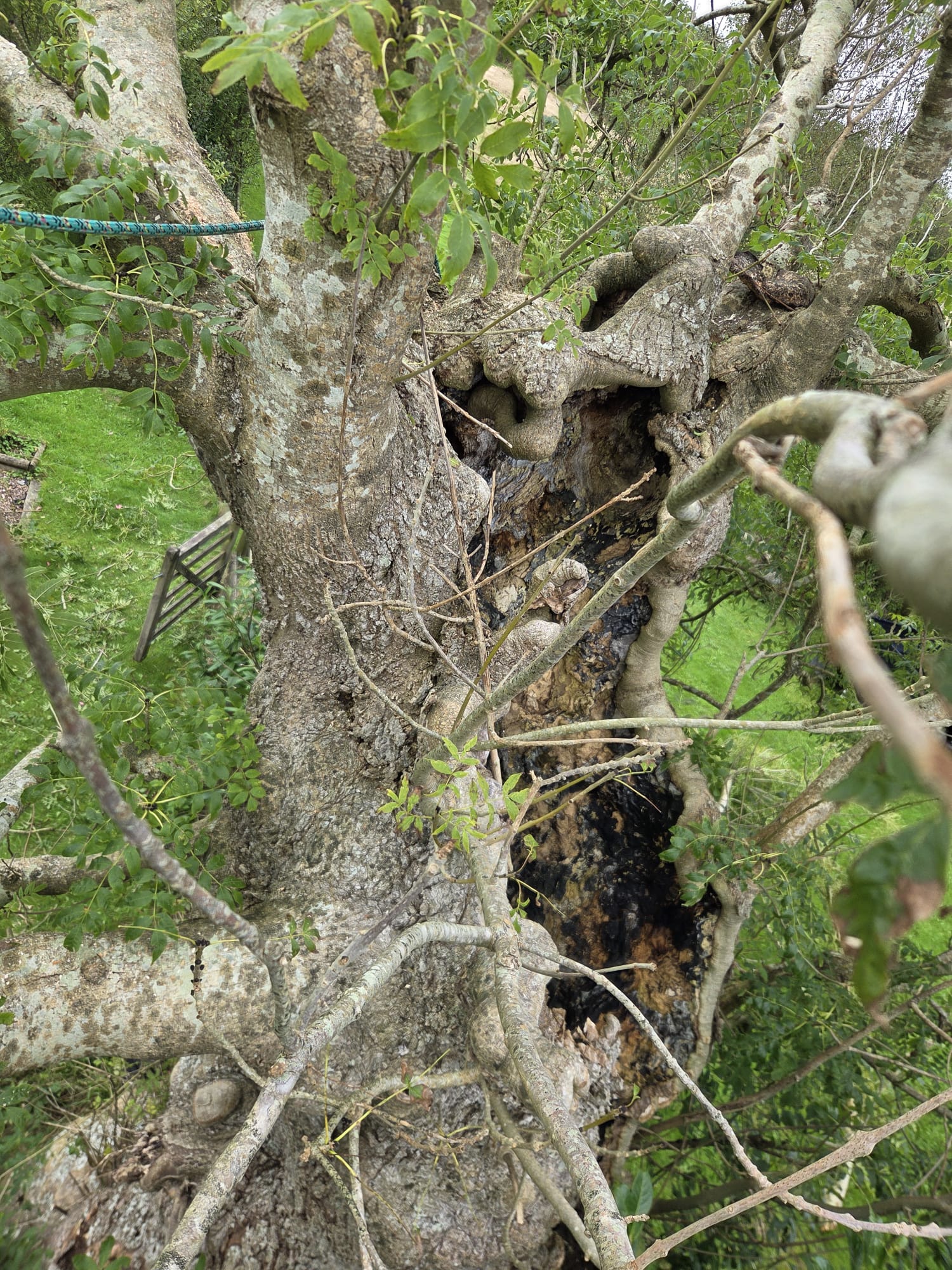
Ash dieback is a serious tree disease that affects ash trees across the UK. Caused by the fungus Hymenoscyphus fraxineus, the disease can weaken trees over time and, in severe cases, cause them to die. Learning how to recognise the early signs of ash dieback can help property owners identify potentially affected trees and arrange a professional assessment.
While ash dieback does not necessarily mean a tree needs to be removed immediately, infected trees can become structurally unstable as the disease progresses. Knowing what to look for is therefore particularly important if an ash tree is close to a house, road, footpath or other area where people could be at risk.
What Is Ash Dieback?
Ash dieback primarily affects common ash trees, which are widespread throughout the UK. The disease attacks the tree’s leaves, shoots and branches, disrupting its ability to grow and remain healthy.
Some trees may tolerate the disease better than others. Young ash trees can be particularly vulnerable, while older trees may survive for several years after becoming infected. However, repeated infections can gradually weaken the tree and increase the risk of branch failure.
1. Look for Dead or Dying Shoots
One of the most recognisable symptoms is the presence of dead or dying shoots, particularly towards the ends of branches. These may appear during the growing season and can give affected parts of the tree a noticeably unhealthy appearance.
New shoots may die back, leaving bare sections among otherwise healthy growth.
2. Check the Leaves for Dark Patches
Ash dieback can cause dark or brown lesions to develop on leaves. The leaves may appear wilted, discoloured or unhealthy before falling prematurely.
If an ash tree develops unusual leaf damage during the summer, it is worth monitoring closely and seeking professional advice if the symptoms persist.
3. Look for Diamond-Shaped Lesions
Another characteristic symptom is the development of diamond-shaped lesions on young stems and branches. These areas of damaged bark can become darker than the surrounding bark and may gradually expand.
Lesions are particularly useful when assessing ash dieback because they can help distinguish the disease from some other causes of ash decline.
4. Watch for Crown Dieback
As the disease progresses, affected trees may develop thinning crowns. Branches and shoots can die back, creating areas of sparse foliage.
A healthy ash tree should generally have a full, balanced crown during the growing season. Significant thinning or an increasing amount of deadwood can indicate that further investigation is needed.
5. Look for Epicormic Growth
Ash trees affected by dieback may produce unusual new shoots from the trunk or larger branches. This growth, known as epicormic growth, can occur as the tree responds to stress.
Although epicormic shoots can have other causes, their presence alongside leaf lesions, stem lesions and crown dieback may be a sign of ash dieback.
Is Ash Dieback Dangerous?
Ash dieback can become a safety concern because infected trees may become progressively weaker. As branches die, they can become brittle and more susceptible to breaking, particularly during windy weather.
However, not every ash tree showing signs of dieback is immediately dangerous. The condition of the individual tree, its location and the extent of infection all need to be considered.
If you are concerned about an ash tree near your property, a professional assessment is the safest approach. An experienced tree surgeon Ilfracombe homeowners can rely on can inspect the tree and advise whether monitoring, pruning or other management is appropriate.
For properties throughout the wider area, a qualified tree surgeon North Devon residents can trust can also assess ash trees and identify potential hazards.
What Should You Do If You Suspect Ash Dieback?
Do not attempt to climb or heavily prune an affected tree yourself, particularly if it is large or located near buildings, roads or public areas. Professional tree work can involve significant risks and requires appropriate equipment and expertise.
If you suspect ash dieback, make a note of the symptoms and arrange an inspection. It is also important to remember that several other conditions can cause ash trees to lose leaves, develop dead branches or show signs of decline.
Early identification allows the tree’s condition to be monitored and helps property owners make informed decisions about future management.
By checking ash trees regularly for dead shoots, discoloured leaves, stem lesions, crown dieback and unusual growth, you can spot potential signs of ash dieback before the problem becomes more serious. When in doubt, professional advice can help determine the safest and most appropriate course of action.

